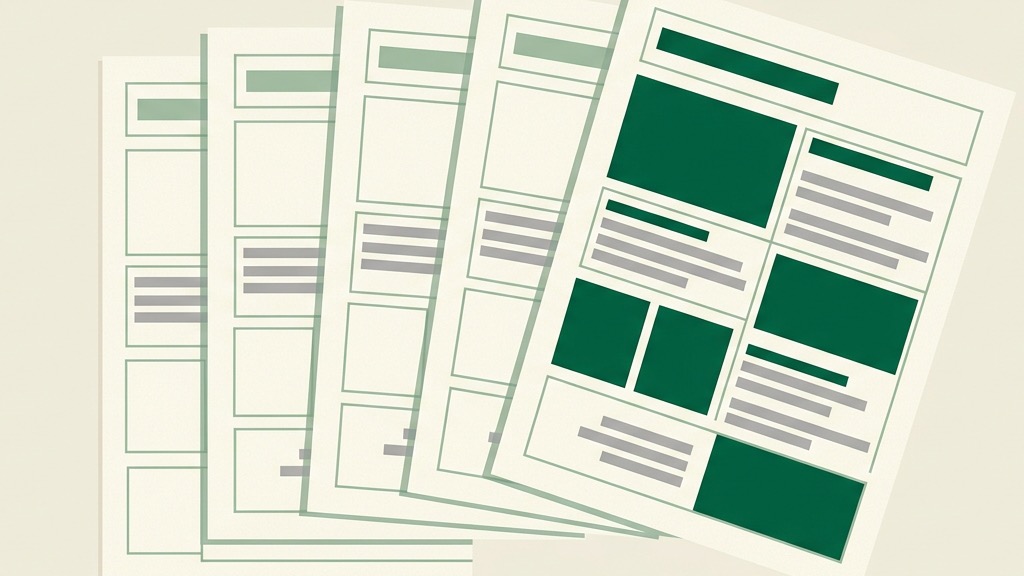
No, using a template is not plagiarism. A template is a document built to be reused, reuse is its entire function, and the license it came with is the permission in writing. Nobody plagiarizes a proposal template any more than they plagiarize a spreadsheet by typing into its columns.
So if the question is keeping you up, relax about the template itself. Then stay up ten more minutes for the three reuse patterns nearby that do cause real trouble in commercial work, because I have watched each of them cost an agency money, and none of them announces itself as a problem while you are committing it.
Why the template is the wrong thing to worry about
Plagiarism is passing off someone else's work as your own where originality is the expectation. A template fails that definition twice. The author handed it to you for exactly this purpose, and nobody reading a cover page, a services agreement, or a pricing table expects bespoke prose. Where there is no expectation of originality, reuse is just use.
Business writing runs on shared skeletons, and the skeleton is not where your value lives. Clients do not hire you for an original definition of a discovery phase. They hire you for what you put inside it.
Trouble one: boilerplate with someone else's fingerprints
The first real problem is provenance. A template you bought or built is yours to reuse. A competitor's proposal that a new hire "borrowed the structure of," a sample scope-of-work found on someone's site and quietly adopted, a paragraph lifted from a rival's service page because it read well: that is not template use, it is copying, and the fact that it lives in your snippets folder does not launder it.
The dangerous version is inherited. Team boilerplate accumulates over years, nobody remembers where half of it came from, and the person who pasted a found paragraph into the master proposal left in 2023. You are now shipping text of unknown origin under your letterhead, to clients, with a warranty of originality in some of those contracts. It is worth one afternoon, once, to scan your standard documents and see what they match: PlagiarismCheck.io is free, takes 2,000 words at a time, and links every match to its source, which turns "I think our boilerplate is ours" into something you have actually checked.
Trouble two: you may have sold that paragraph already
Here is the pattern that surprises agency owners. Your contract with client A assigns them the deliverables, all rights included, which is a common clause and clients like it. Six months later you reuse your favorite methodology section, polished across years, in a proposal for client B. If that section was part of what you assigned, the paragraph you just reused may belong to client A now.
Freelancers meet the same trap from the other side. If your client contracts say work-for-hire and assign everything, the intro paragraph you have polished across forty gigs is legally scattered across forty owners, and the next client who runs a plagiarism check on your draft will find it matching published work you no longer control.
The standard fix exists and belongs in the contract, not in your habits: a clause carving out your pre-existing materials, frameworks, and templates from the assignment, so what you sell is the bespoke work and a license to the reusable parts. If your agreements assign everything without that carve-out, the fix is a conversation with a lawyer before the next signature, not after a dispute. The one-line takeaway: know which of your paragraphs you still own, because reuse you are not entitled to make is a legal problem wearing plagiarism's clothes.
Trouble three: billing bespoke for boilerplate
The third problem has no legal name because it is an honesty problem. A client paying for a custom strategy document, receiving your standard document with their logo swapped in, has not been plagiarized. They have been overcharged, and when they discover it, and templated documents are discoverable, two clients comparing notes is all it takes, the damage lands on the same asset plagiarism hits: your credibility.
The repair is disclosure, and it costs nothing. "We work from a framework we have refined across dozens of engagements, and sections three through five are built specifically for you" is a sentence clients like, because frameworks signal experience. What they mind is not the reuse. It is the pretense, which is the same thing readers mind about researchers recycling their own text: every legitimate reuse pattern shares one property, declared instead of discovered.
The one place a template does become plagiarism
Every rule above rests on one premise: nobody expected originality. Flip that premise and the answer flips with it. A student assigned an original essay who downloads an essay template and fills in the blanks has plagiarized, not because templates are wrong but because original composition was the assignment, and the skeleton was the thing being graded. The same inversion applies anywhere the deliverable is the writing itself: a commissioned article, a speech, an application letter that claims to be your own words.
The test travels well because it is one question: what did the reader believe they were getting? Where the answer is "a filled-in standard form," reuse away. Where the answer is "this person's own writing," the template is a ghostwriter you did not disclose.
The quiet SEO tax on template copy
One more cost sits outside ethics entirely. If you run the same boilerplate service descriptions across every client site you build, or the same template sections across your own site's pages, nothing is stolen and nothing is penalized, but you have manufactured a pile of near-identical pages, and duplicate content has real costs without any penalty existing: the pages compete, signals split, and none of them gives a search engine a reason to pick it. Template the structure, write the substance fresh per page, and the problem never forms.
A snippet library that answers its own questions
The operational fix for all three troubles is the same small system. Keep your reusable text in one place, and tag every block with its provenance: built in-house, licensed and from where, or produced under a contract that assigned it away. Add a line for when it was last verified. New text enters the library only with a tag, and anything untagged is treated as unverified until someone checks it.
It sounds bureaucratic and it is fifteen minutes a month, which is cheaper than any single one of the conversations it prevents: with a rival whose paragraph surfaced in your proposal, with client A's lawyer about client B's deliverable, or with a prospect who found your bespoke methodology on three other agencies' sites.
The short answer, kept short
Templates are tools, and using tools is not cheating. The trouble lives next door, in text whose origin you have not checked, rights you have not kept, and customization you have implied but not done. Check the provenance once, fix the contract clause once, disclose the framework always, and reuse becomes what it was supposed to be all along: the reason your Tuesday proposal takes two hours instead of two days.